Does Sound Deadening Really Work?
What deadening does, where to put it first and how much you really need. Spoiler: less than you think.
 Note 08GuidePlain English
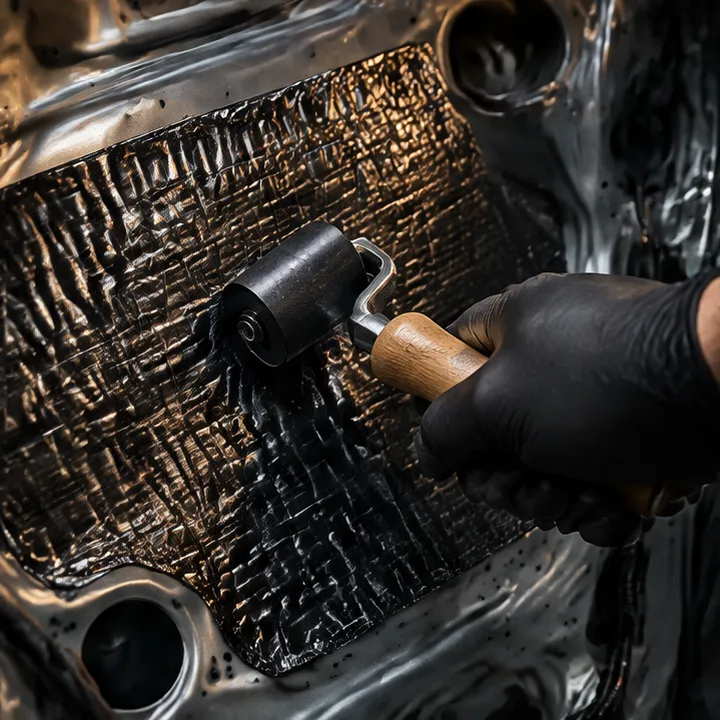
Sound deadening is a heavy mat, usually butyl rubber with an aluminum layer, that sticks to metal panels. It adds mass and damps vibration, so the panel stops ringing like a drum. In a car this means a quieter ride and tighter, cleaner bass.
What it does and does not do
- It reduces panel vibration and rattles.
- It lowers road and tire noise somewhat.
- It improves bass from door speakers.
- It does not fully block sound from outside, which needs mass and sealed gaps.
You do not need to cover everything
A good rule is that covering a quarter to a third of a flat panel with mat is often enough to stop it ringing. Tap the panel with a knuckle: if it rings, treat it, and if it thuds, leave it.
Where to start
Front doors give the biggest improvement in sound quality. The floor and the trunk are next for noise, and the roof helps in rain and on the highway.
Estimating the amount
The Sound Deadening Calculator on this site estimates the area for each part of the vehicle and the number of sheets to buy.
Car Audio Nashville is a mobile car audio installer. Tools, charts and guides on this website give general information and planning figures, not a quote, a promise or professional advice for your vehicle. Car electrical work can be dangerous: disconnect the battery and follow safety rules, or leave it to a professional.
Put it into practice
See how Car Audio Nashville handles sound deadening installation, or open the Sound Lab to plan the job.